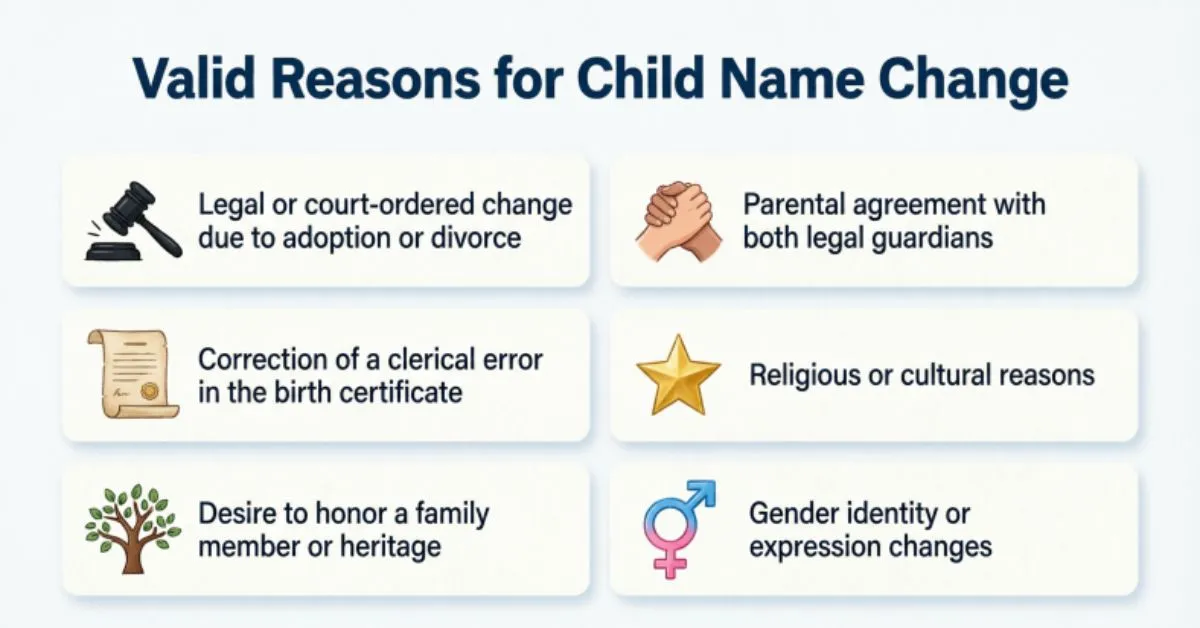
Changing a child’s name is a big decision. Parents often wonder if it’s necessary, what reasons are accepted legally, and how it can impact the child’s future.
Many people search for valid reasons for child name change to ensure their request is justified and approved by the court. Understanding the common and legally recognized reasons can save time, reduce stress, and help the child grow with a name that suits their identity.
In this guide, we’ll explore the most valid reasons for changing a child’s name, how to approach the process, and tips for making a smooth transition.
Correcting Spelling Mistakes ✏️

Sometimes, parents make small errors when registering a child’s name. Even minor spelling mistakes can cause confusion on official documents. Correcting these errors is one of the most straightforward reasons for a name change.
Examples:
- Jaydenn → Jayden
Correcting the extra “n” for easier documentation. - Alycia → Alicia
Simplifying spelling to match common usage. - Jonathon → Jonathan
Fixing the official spelling for consistency. - Sophhie → Sophie
Avoiding mispronunciations. - Kaitlyn → Caitlin
Ensuring standard spelling in records. - Mikhael → Michael
Aligning with traditional spelling. - Emmalee → Emily
Reducing unnecessary letters. - Isabell → Isabelle
Correcting to widely recognized spelling. - Jakob → Jacob
For legal clarity on documents. - Nathanel → Nathaniel
Fixing typographical error on birth certificate.
Family Harmony Reasons 👪
Sometimes, a child’s current name may cause tension within the family. Changing a name can help avoid conflicts or honor family traditions more appropriately.
Examples:
- Alex → Alexander
Honoring a grandfather’s name. - Ella → Eleanor
To include a family heritage name. - Ben → Benjamin
Balancing preferences between parents. - Lily → Lillian
Matching sibling naming patterns. - Sam → Samuel
Respecting cultural naming customs. - Zoe → Zoey
Avoiding repeated names in family members. - Jack → John
Honoring a deceased relative. - Chloe → Cleo
Bringing uniqueness while keeping family connection. - Leo → Leonardo
Integrating family lineage. - Mia → Maria
To reflect family traditions.
Avoiding Negative Associations ⚠️
A name can sometimes unintentionally carry negative associations, leading parents to opt for a change. This is a common and valid reason recognized legally.
Examples:
- Adolf → Adam
To avoid historical negative connotations. - Judas → Jude
Changing due to religious or cultural concerns. - Lucifer → Luke
Avoiding frightening associations. - Delilah → Lila
Reducing negative societal perception. - Brutus → Brent
Avoiding name with violent connotations. - Hannibal → Henry
For neutral social acceptance. - Damien → Daniel
Eliminating horror-related references. - Jett → Jetson
Removing aggressive or strong image. - Draco → Drake
Avoiding villainous reference. - Medusa → Maya
Choosing a more positive association.
Cultural or Religious Reasons ✝️☪️☸️

Some families wish to align their child’s name with their cultural, ethnic, or religious identity. This is considered a valid reason for child name change.
Examples:
- Muhammad → Ahmed
Adapting to religious or cultural preference. - John → Juan
Reflecting family heritage. - Sarah → Sara
Cultural spelling adaptation. - Elizabeth → Elizabetta
Honoring Italian roots. - David → Dawud
Religious language alignment. - Rebecca → Rivka
Jewish heritage adaptation. - Mary → Mariam
Reflecting family traditions. - Joseph → Yusuf
Cultural identity integration. - James → Jacques
French heritage adaptation. - Anna → Anya
Slavic cultural adaptation.
Nickname Integration 🐻
Many parents choose to make a nickname the child’s official name. This is common for children who respond better to a shorter or friendlier version.
Examples:
- Maxwell → Max
Shorter, casual version. - Katherine → Kate
Easier for friends and teachers. - Alexander → Alex
Preferred everyday use. - William → Will
Friendly and approachable. - Benjamin → Ben
Simple and easy to remember. - Charlotte → Charlie
Fun and modern feel. - Samuel → Sam
Familiar and informal. - Elizabeth → Lizzie
Cute and friendly nickname. - Theodore → Theo
Shorter, trendier version. - Isabella → Bella
Commonly used affectionate nickname.
Legal or Adoption-Related Reasons ⚖️
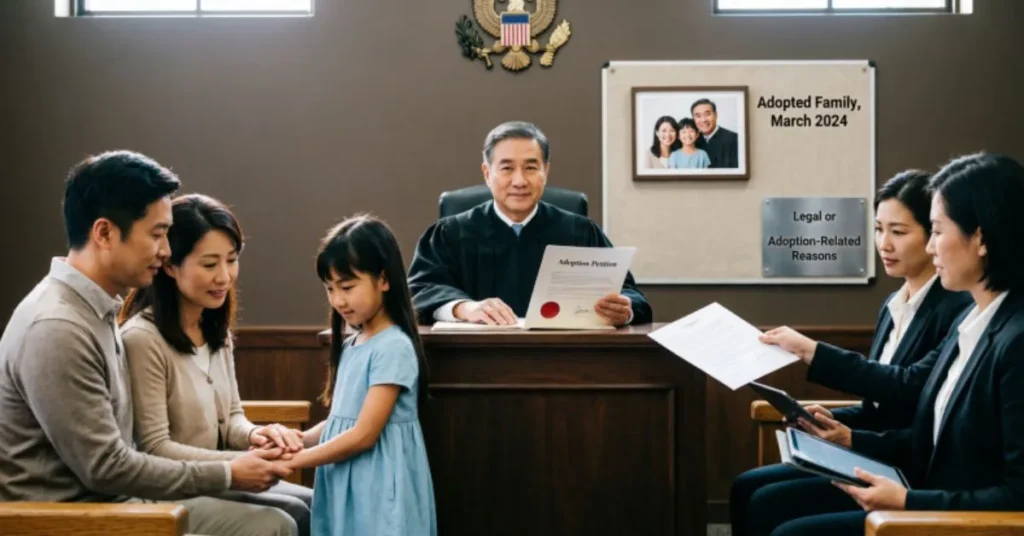
A child’s name might need changing due to adoption, custody, or legal processes. Courts typically recognize these reasons.
Examples:
- Original surname → Adoptive family surname
Integrates child into new family legally. - Previous legal name → New legal name
Post-adoption legal requirement. - Step-parent surname → Child’s surname
For unity in blended families. - Minor spelling adjustments
Ensuring consistency across legal documents. - Full legal name → Shortened preferred name
To simplify records. - Correction of birth certificate error
Avoiding legal complications. - Court-mandated name change after adoption
Legal necessity. - Changing middle name to honor adoptive parent
Symbolic integration. - Child preference for legal name update
Considered in older minors. - Hyphenated surname creation
For both biological and adoptive parents.
Avoiding Bullying or Teasing 😢
Some names unintentionally lead to bullying at school or in social settings. Parents can change the name to protect the child emotionally.
Examples:
- Dick → Richard
Avoid teasing associated with slang. - Fanny → Frances
Reduces embarrassment. - Shad → Shade
Minimizes ridicule at school. - Candy → Candice
Avoids teasing from peers. - Tiny → Tyler
Nickname used negatively in social settings. - Peewee → Paul
Avoiding mockery due to size reference. - Chubbs → Charles
Protecting child from negative body-based teasing. - Bubba → Benjamin
Transitioning to formal, socially accepted name. - Spike → Simon
Avoiding rough image. - Princess → Priscilla
Eliminating over-the-top teasing.
Personal Preference or Identity 🌈
As children grow, their identity and preferences may lead parents to change names to reflect individuality.
Examples:
- Jordan → Jordon
Spelling adjusted to match personal identity. - Taylor → Teylor
Creative identity expression. - Alex → Alexis
Preference for a gender-neutral name. - Charlie → Charlotte
Child’s preferred full name. - Sam → Samantha
Transition to reflect gender identity. - Mickey → Michael
Formalization preference. - Jess → Jessica
Full name adoption for personal identity. - Pat → Patricia
Gender-appropriate preference. - Cameron → Camryn
Modern spelling for uniqueness. - Chris → Christine
Reflects child’s personal choice.
Simplifying Complex Names 🌀
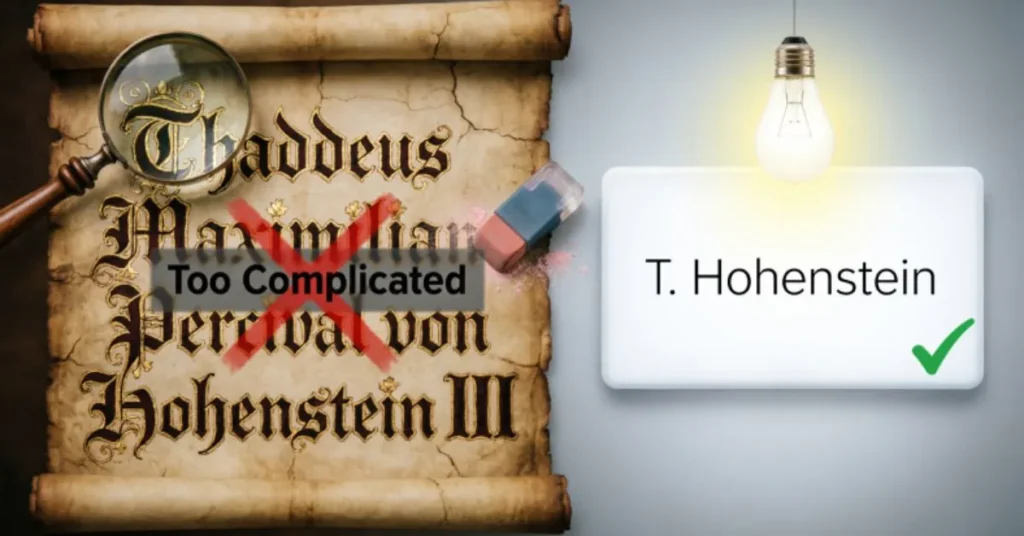
Long or complex names can be challenging for children, teachers, and peers. Simplifying can make life easier.
Examples:
- Alexandros → Alex
Shorter and easier to pronounce. - Maximiliano → Max
Simplified daily use. - Guadalupe → Lupe
Easier for friends to say. - Sebastian → Seb
Friendly and casual. - Feliciano → Felix
Shortened for convenience. - Theodosia → Theo
Easier for school usage. - Leonardo → Leo
Simplified and trendy. - Jonathan → Jon
Common nickname adoption. - Isabella → Isa
Shorter version for easy recall. - Giovanni → Gio
Simple and catchy.
Unique or Meaningful Reasons 🌟
Sometimes parents want to give a child a name with deeper meaning or uniqueness. This is widely accepted as valid when backed by good reason.
Examples:
- Hope → Faith
Symbolic meaning change. - Sunshine → Sol
Unique and meaningful adaptation. - Ocean → Kai
Reflecting family love for nature. - Rose → Rosalie
Unique twist while keeping original name. - Star → Stella
Name inspired by celestial meaning. - Joy → Joanna
More formal but retains meaning. - River → Rivka
Unique cultural adaptation. - Grace → Gracia
Spiritual and elegant. - Sky → Skye
Alternative spelling for uniqueness. - Pearl → Perla
Cultural or personal preference.
Conclusion ✨
Changing a child’s name can feel daunting, but when done for the right reasons, it can help a child thrive emotionally, socially, and culturally. From correcting spelling mistakes to honoring family heritage, avoiding teasing, or reflecting identity, these valid reasons for child name change cover a wide range of scenarios.
By carefully considering the purpose and legal requirements, parents can ensure a smooth process and give their child a name they will love. Remember, the goal is always to support the child’s well-being and confidence.